100%
GRIMOIRE
GrimoireDindon CorpusSynthesis VolumesThe Foundation of Iron
FRENAR
← PreviousNext →
RATIO
STRUCTURAL STUDY · OPÉRATION DINDON · JUNE 2026
◆◆◆
GRADE A
REFURBISHED
What the second-hand machine says
that the new one does not
◆ CONTEXT OF THE STUDY

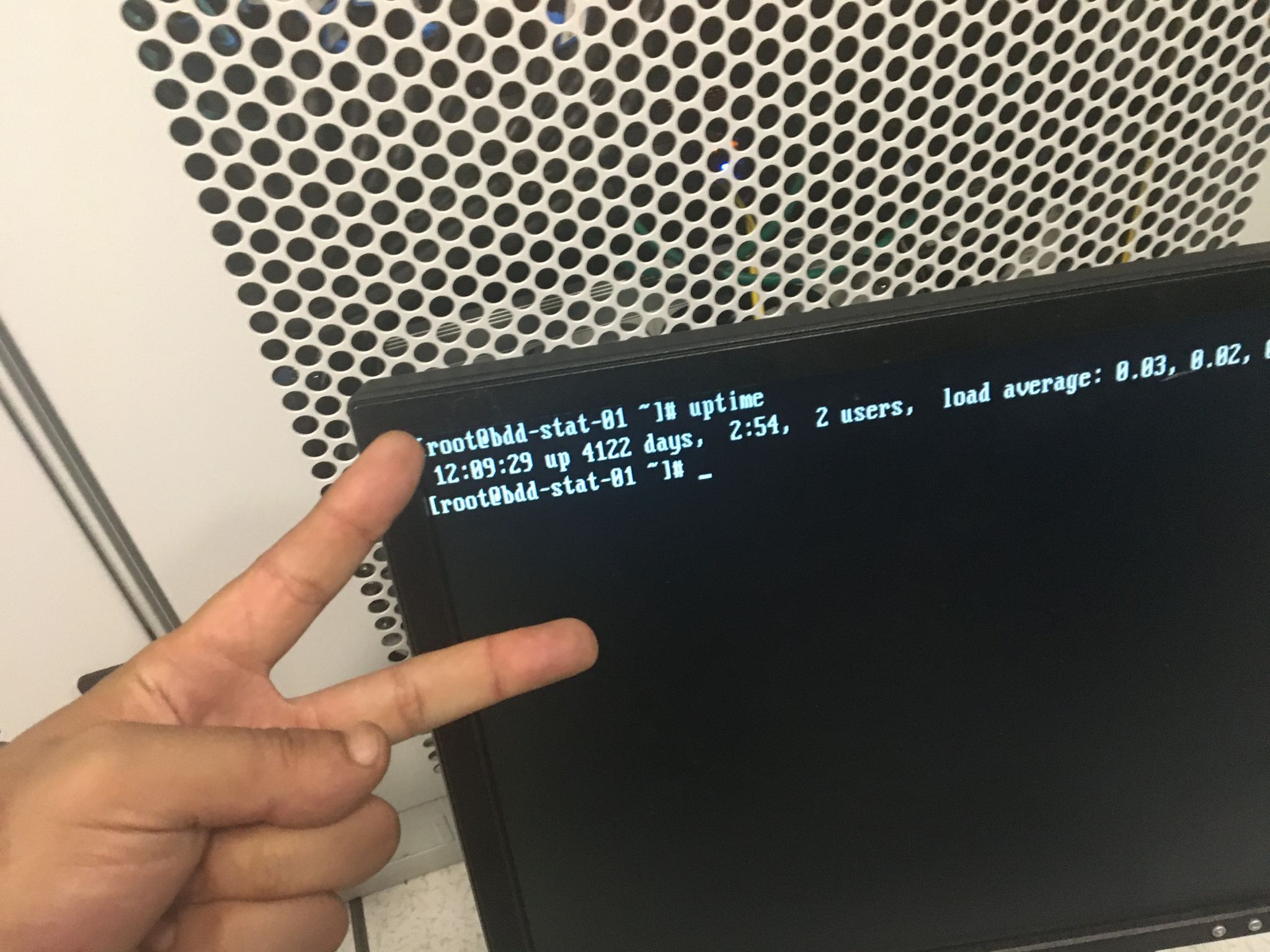
This study completes the Opération Dindon corpus on a hardware FinOps angle. It addresses Grade A refurbished server hardware as an infrastructure strategy — economically, ecologically and operationally. It draws on the author's direct experience as Head of SRE, on real purchase figures, and on a photograph of a machine that proves through its uptime counter that enterprise hardware is built to last.

◆◆◆
Amine RAITI — Infrastructure Architect & SRE
Former engineering school professor · Infrastructure instructor
Public document · CC BY-NC-SA 4.0 · AI Powered by Amine · Opération Dindon
RATIO
1
SECTION 1 · THE MACHINE WITH 4,122 DAYS OF UPTIME
THE BEST PROOF IS IN THE UPTIME COUNTER

4,122 days. That is the uptime counter of a legacy database machine, isolated in its corner of the rack, that nobody wanted to touch because it has been running for so long that everyone is afraid to stop it. 4,122 days is more than 11 years of uninterrupted operation.

Uptime counter at 4,122 days — legacy database machine
Uptime: 4,122 days — legacy database machine · © Amine RAITI

This machine is not an exception. It is the demonstration that enterprise server hardware is designed to last well beyond the 3-to-5-year renewal cycles that manufacturers recommend — and that finance departments approve without question. A server that has been running for 11 years without a major hardware incident is not a server on borrowed time. It is a server proving that the operational durability of enterprise hardware is structurally underexploited.

◆ NASSIHA — WHAT THIS MACHINE DOES NOT DEMONSTRATE

4,122 days of uptime on an isolated legacy machine does not mean all hardware can be used indefinitely. This machine is a database under controlled load, without extreme demand, in a thermally stable environment. It demonstrates that the real operational lifespan of enterprise hardware is well above what standard procurement cycles assume — not that renewal is unnecessary.

RATIO
2
SECTION 2 · THE NUMBER THAT DOES NOT LIE
€3,000 AGAINST €12,000 — IDENTICAL WORKLOAD

The comparison is simple. A Dell PowerEdge R640 Grade A refurbished with extended support — 192 GB RAM, 4×1 TB SSD, dual Xeon CPU — cost €2,100 in January 2024 from a specialist operator. In June 2026, with the surge in RAM component prices and general inflation, that same server trades at around €3,000. Its direct successor in new condition — a Dell PowerEdge R760 configured to equivalent specifications — is billed between €8,000 and €12,000 depending on configuration and procurement channel.

◆ THE 1-TO-4 RATIO

€3,000 against an average of €10,000: Grade A refurbished comes in at roughly one quarter of the new price for an identical workload. Across a fleet of 10 servers, the difference is €70,000. Across a fleet of 50 servers — a common size for a medium SRE infrastructure — it is €350,000. This is not a marginal saving. It is a budgetary architecture decision.

◆ WHAT THE PRICE INCLUDES ON THE REFURBISHED SIDE

The Grade A refurbished price is not the price of a bare machine. From serious operators it includes a full refurbishment (cleaning, testing of all components, replacement of defective parts), a contractual warranty, and the option of extended support covering hardware beyond manufacturer support. The comparison with new is therefore service for service — not a bare machine against a new one.

◆ THE PRICE OF THE XEON ALONE IS A REVELATION

On a new R750 (15th generation intermediate), a single Intel Xeon Gold 6346 processor is billed at $2,317 by the integrator. Two processors therefore represent over $4,600 before counting the chassis, RAM, storage and support. The R640 refurbished at €3,000 complete — dual CPU, 192 GB RAM, 4 SSDs, extended support — costs less than the two processors alone of an intermediate generation in new condition. This is not a promotion. It is the reality of the enterprise refurbished hardware market.

RATIO
3
SECTION 3 · WHAT GRADE A MEANS
NOT SECOND-HAND — REFURBISHED INFRASTRUCTURE

The word "second-hand" evokes risks that Grade A refurbished in an enterprise environment does not carry. The distinction is structural and deserves to be made explicit — because it is often the confusion between the two that blocks purchasing decisions in organisations that have never tested the model.

◆ WHAT GRADE A MEANS CONCRETELY

Full refurbishment: the machine is fully disassembled, cleaned, all components individually tested, defective parts replaced with certified original parts. It leaves in an internal condition equivalent to new.

Grade A cosmetic: the machine may show minor signs of use on the chassis — light scratches, coating wear. It does not look like a machine fresh from the box. In a rack, behind a bay door, this has zero operational relevance.

Contractual warranty: serious operators offer a 12-to-36-month warranty on refurbished hardware, with replacement of defective components.

Extended support: specialists such as Evernex, Park Place Technologies, Curvature or MaintenX offer multi-vendor maintenance contracts covering Dell, HP, Cisco, NetApp and others — with SLA, on-site intervention and parts replacement — on hardware beyond official manufacturer support. This extended support is the keystone that makes refurbished viable in critical production.

◆ WHAT DISTINGUISHES A GOOD OPERATOR FROM A BAD ONE

The quality of Grade A refurbished depends entirely on the operator. A good operator publishes their testing procedures, provides the Dell service tag (verifiable on Dell's support site for the machine's full history), offers a clear support SLA, and holds spare parts stock for the models they sell. A bad operator sells cleaned hardware without functional testing under a superficial warranty. Due diligence on the operator is the real step in securing a refurbished purchase — not systematic distrust of the model.

◆ NASSIHA — REFURBISHED IS NOT FOR EVERYONE

Grade A refurbished with extended support is suited to stable production workloads on proven hardware. It is not suited to workloads requiring the latest processor generations (AI, HPC), architectures dependent on PCIe Gen5 or DDR5 features, or environments where direct manufacturer support is a contractual or regulatory requirement. For the rest — and that is the majority of infrastructure workloads — it is the right choice.

RATIO
4
SECTION 4 · THE ECOLOGICAL ARGUMENT
EVERY MACHINE NOT BOUGHT NEW IS A CHIP NOT ORDERED FROM TAIWAN

The ecological argument for refurbished is often presented as secondary — a good conscience on top of a good price. This is a framing error. The ecological argument is an industrial sovereignty argument as much as an environmental one, and it connects directly with the theses of "The Digital Iron" in the Opération Dindon corpus.

◆ MANUFACTURING A SERVER: WHAT IT CONSUMES

Manufacturing a new server is one of the most resource-intensive acts in the digital industry. It mobilises rare earths extracted in China, chips manufactured in Taiwan at TSMC, printed circuit boards produced in Southeast Asia, and an assembly process consuming significant energy and water. The carbon footprint of server manufacturing represents a substantial proportion of total lifetime carbon footprint — some studies estimate it between 50 and 80% of the total over 4 years.

◆ EXTENDING LIFESPAN: THE MOST EFFECTIVE LEVER

A server used for 8 years instead of 4 halves its manufacturing energy consumption per year of service. A refurbished server used for a second life of 4 years avoids entirely the manufacture of a new server. Across a fleet of 50 servers renewed every 4 years, switching to Grade A refurbished represents avoiding the manufacture of 50 new servers every 4 years — with everything that implies in terms of TSMC chips not ordered, rare earths not extracted, and manufacturing cycles not triggered.

◆ THE LINK WITH "THE DIGITAL IRON"

"The Digital Iron" documented that 90% of the world's advanced chips are manufactured by TSMC in Taiwan, on a territory of 35,000 km² exposed to structural geopolitical tension. Every new server not purchased is an order of chips not placed with TSMC. Grade A refurbished is therefore also a lever for reducing dependence on the semiconductor supply chain — not only a cost-reduction lever. These two arguments arrive at the same conclusion by different paths.

RATIO
5
SECTION 5 · EXTENDED SUPPORT — THE KEYSTONE
WHAT MAKES REFURBISHED VIABLE IN CRITICAL PRODUCTION

The main barrier to adopting refurbished in critical production is not hardware reliability — that is demonstrated. It is the support question: what happens when a component fails on hardware beyond manufacturer support? The answer is third-party extended support — a structured market, with established actors, contractual SLAs and spare parts stock that allow hardware to be maintained long after the end of official support.

◆ WHAT AN EXTENDED SUPPORT OPERATOR OFFERS

Specialist operators — among them Evernex, Park Place Technologies, Curvature and MaintenX — offer multi-vendor maintenance contracts covering Dell, HP, Cisco, NetApp and others. These contracts include an intervention SLA (4h, 8h, NBD depending on the level chosen), certified spare parts stock, 24/7 on-call support, and technical assistance. The cost of such a contract is significantly below Dell's ProSupport manufacturer support on new hardware — while covering hardware that Dell no longer officially supports.

◆ SERVICE TAG VERIFICATION — A MANDATORY STEP

Before any refurbished purchase, the machine's service tag must be verified on Dell's support website. This unique number reveals the original manufacturing date, the history of warranty interventions, and any parts replaced. A transparent service tag is the first sign of a serious operator. An operator who refuses to provide it before purchase is an operator to avoid.

◆ THE 3-YEAR ROI — THE CALCULATION THAT CONVINCES CIOs

Over 3 years, for 10 Grade A refurbished R640 servers at €3,000 each with extended support at €500/year/machine:
Total investment: €30,000 (hardware) + €15,000 (3-year support) = €45,000

Over 3 years, for 10 new R760 servers at €10,000 each with Dell Basic ProSupport:
Total investment: €100,000 (hardware) + €18,000 (support) = €118,000

Saving: €73,000 over 10 machines over 3 years — for an identical workload.

RATIO
6
SECTION 6 · THE PROPOSAL
GRADE A REFURBISHED FIRST — A PROCUREMENT POLICY

The proposal of this study is not to replace all new hardware with refurbished. It is to reverse the burden of proof in purchasing decisions: instead of justifying why you choose refurbished, justify why you choose new. New hardware has legitimate use cases. They are fewer than commonly assumed.

◆ WHEN TO CHOOSE GRADE A REFURBISHED

— Stable production workloads on proven technologies: databases, web servers, virtualisation, storage
— Environments where direct manufacturer support is not a contractual or regulatory requirement
— Fleet renewal on well-documented server generations (R630, R640, R740, HP DL360 Gen9/Gen10)
— Lab, staging, development environments — without exception

◆ WHEN TO CHOOSE NEW

— Workloads requiring the latest processor generations: AI, HPC, GPU inference
— Architectures dependent on PCIe Gen5, DDR5, or features unavailable on refurbished generations
— Contractual or regulatory requirements mandating direct manufacturer support
— Edge computing and space-constrained environments where latest-generation density is determinative

◆ THE THREE CONCRETE MEASURES

Measure 1: integrate a refurbished vs new analysis into every hardware procurement process exceeding €10,000. The decision to choose new must be technically justified, not assumed by default.

Measure 2: integrate real operational lifespan and carbon footprint into hardware procurement evaluation criteria — on a par with performance and acquisition cost.

Measure 3: qualify at least one third-party extended support operator in the organisation's supplier panel. This pre-qualification removes the support barrier and makes refurbished immediately actionable when the decision is made.

◆◆◆

4,122 days of uptime. The machine does not lie. Enterprise hardware lasts far longer than procurement cycles assume. Grade A refurbished is the economic, ecological and operational proof.

◆◆◆
NEMO SUPRA LEGEM EST

Place uptime.jpg in the same folder as this file before printing.

← PreviousNext →