100%
GRIMOIRE
GrimoireDindon CorpusSynthesis VolumesThe Foundation of Iron
FRENAR
HUMAN
STRUCTURAL STUDY · OPÉRATION DINDON · JUNE 2026
◆◆◆
THE INVISIBLE
AMPUTATION
Why women were pushed out of bare-metal
◆ CONTEXT OF THE STUDY

This study extends "The Silence of the Rooms" — which documented women's absence from SRE — by posing a question that first study did not explicitly formulate: what if this absence was not accidental? It defends a three-level thesis — documented, structural, and hypothetical but coherent — on the relationship between women's exclusion from bare-metal infrastructure and the economic interests of hyperscalers. It concludes with the only structural response possible: early education.

◆◆◆
Amine RAITI — Infrastructure Architect & SRE
Former engineering school professor · Infrastructure instructor
Public document · CC BY-NC-SA 4.0 · AI Powered by Amine · Opération Dindon
HUMAN
1
SECTION 1 · THE FIELD SRE — STRUCTURAL ENEMY OF HYPERSCALERS
THE ONE WHO CAN ALWAYS FALL BACK

The SRE engineer who masters infrastructure from the physical layer to the application layer is structurally hyperscalers' number one enemy. Not because they are hostile to them — but because they possess a capability that cannot be taken from them: the ability to fall back. To return to bare metal. To rebuild a sovereign infrastructure. To set the hard limits that cloud contracts never set.

This competence is an existential threat to the hyperscaler economic model. A client who can leave is a client who negotiates. A client who cannot leave is a captive. The lock-in strategy documented in "Anatomy of the Loss" aims to produce captive clients. And the most dangerous professional body for this strategy is precisely the SRE and systems administrator community who know how to build outside the cloud.

◆ WHAT A BODY AMPUTATED BY HALF LOSES SIMULTANEOUSLY

If this body is reduced by 50% through the systematic exclusion of half the population, it loses three distinct things simultaneously.

Numbers: the documented shortage of infrastructure profiles is directly amplified. Fewer engineers capable of falling back means fewer clients capable of negotiating.

A different perspective: women entering technical fields bring statistically a more conservative relationship to risk, a tendency to question implicit assumptions, and stronger resistance to technological fashion effects. This perspective is precisely the one that sets hard limits — and precisely the one that "soft on hard limits" DevOps seeks to replace.

Institutional legitimacy: a 95% male professional body is more easily caricatured, marginalised, and replaced by a generic title ("DevOps engineer") that can be positioned as more modern, more inclusive, more open — while being less competent on the physical layer.

HUMAN
2
SECTION 2 · WHAT THE DOCUMENTATION SHOWS
THE NAMES IN THE CODE EXAMPLES

A thesis about deliberate exclusion deserves at least partial evidence. It will not be found in an internal memo — it is found in the configuration examples that thousands of engineers read every day as they learn their trade. AWS IAM documentation was examined.

◆ WHAT AWS IAM DOCUMENTATION SHOWS

Official IAM examples use a limited set of first names. Female names appear: Jane, Alice, Adele, Patricia, Chloe. Male names appear: John, Bob, David, Jim, Chris, Eli. Apparently balanced — until contexts are examined.

Female names appear systematically in examples of basic user creation and restricted permissions. Male names dominate examples of administrator roles, AssumeRole, advanced permissions, role sessions in CloudTrail.

The canonical example of an IAM security problem features "John Doe" creating the risk — "Jane Doe" inheriting it passively. The woman as a dependent variable of the man's behaviour, in the code example the beginner engineer reads on their first day of AWS training.

◆ NASSIHA — WHAT THIS SIGNAL PROVES AND DOES NOT PROVE

This documentation bias does not prove deliberate exclusion intent. It proves normalisation — the engineer who learns to "assume an admin role" learns that the person doing it is called John. A thousand engineers learning this form a mental representation. This mental representation informs hiring, promotions, and team cultures. This is not a conspiracy. It may be more effective than a conspiracy.

◆ HR LOOKING FOR "SOFT ON HARD LIMITS" DEVOPS

While documentation normalises the male profile in advanced administration roles, HR departments seek "DevOps engineers" — a title that, as documented in "The Infrational Crisis", dilutes real operational competences. This DevOps profile is presented as more inclusive, more collaborative, more modern than SRE or systems administrator. It is also structurally less dangerous for hyperscalers — because it does not master the physical layer.

HUMAN
3
SECTION 3 · THE STRONG THESIS
WHAT IF IT WAS NOT AN ACCIDENT?

This section defends a thesis the author explicitly presents as a hypothesis — not a certainty. It is presented as such because it deserves to be thought through, even without direct proof. A thesis coherent with the interests at stake and with observable facts is not a conspiracy theory. It is a structural hypothesis.

◆ THE STRUCTURAL HYPOTHESIS

Hyperscalers have every interest in keeping the body of SREs and systems administrators — those who can fall back to bare metal — as small as possible, as lacking in legitimacy as possible, and as invisible as possible in public debates about the future of digital infrastructure.

The exclusion of women from this body — through the hostile culture documented in "The Silence of the Rooms", through masculine normalisation in documentation, through the replacement of SRE by DevOps in HR job descriptions — produces exactly this result. The body is amputated by half. It becomes less complete, less diverse in its perspectives, less capable of collectively resisting hyperscaler cognitive capture.

This exclusion did not need to be planned to have been produced. Economic systems produce outcomes that serve their dominant interests — often without anyone having explicitly decided to produce those outcomes. The question is not "was there a secret meeting?" The question is "who benefits from this outcome?" The answer is clear.

◆ THE CONVERGENCE OF MECHANISMS

Four mechanisms converge toward the same result without requiring explicit coordination:

— The hostile culture of bare-metal infrastructure teams (documented)
— Masculine normalisation in technical documentation (documented)
— The replacement of SRE by DevOps in HR job titles (documented)
— The devaluation of hard limits as a necessary competence (documented in "The Infrational Crisis")

Four distinct mechanisms, four distinct actors, one unique result: the professional body most dangerous to hyperscalers is amputated by half and marginalised in the public debate on digital infrastructure.

◆ NASSIHA — WHY DEFEND THIS THESIS DESPITE ITS UNPROVABILITY

A thesis does not need to be proven to be useful. It must be coherent with observable facts and point toward corrective actions that would be relevant even if the thesis were false. If women were accidentally excluded, correcting this is just. If they were deliberately excluded, correcting this is as effective as it is urgent. The strong thesis and the weak thesis lead to the same action.

HUMAN
4
SECTION 4 · WHAT THE FEMALE PERSPECTIVE PROTECTS
THE DIFFERENCE THAT DISTURBS

The diversity argument is often presented as a moral argument — we must include women because it is just. It is just. But it is also an operational argument that homogeneous infrastructure teams tend to ignore.

◆ THE RELATIONSHIP TO RISK

Organisational psychology and risk management studies converge on one finding: mixed groups make better-calibrated risk decisions than homogeneous male groups. Not because women are "less courageous" — but because they statistically have less tendency to follow group effects (groupthink) that push homogeneous teams toward overly aggressive decisions. In infrastructure, refusing groupthink has a name: hard limits. The engineer who says "no, we do not migrate this critical workload to this cloud service before we have an exit plan" is the engineer hyperscalers do not want in the room.

◆ RESISTANCE TO TECHNOLOGICAL FASHION EFFECTS

The culture of homogeneous male technical teams is particularly vulnerable to fashion effects — the shiny technology, the quarter's framework, the architecture that fills conferences. This vulnerability is documented and exploited. Hyperscalers have built conferences (re:Invent, Google Next, Microsoft Build) that are machines for producing fashion effects favourable to their services. A more diverse professional body is structurally more resistant to these fashion effects — because diversity of perspective breaks the group dynamics that fuel them.

◆ THE QUESTION NOBODY DARES ASK IN THE MEETING

In a homogeneous team under conformity pressure, the question "but can we do without this cloud service if the relationship with the provider deteriorates?" is hard to ask. It goes against the collective enthusiasm. Mixed teams ask these foundational questions more readily — because diversity of perspective legitimises the questioning of implicit assumptions. This questioning is exactly what the Opération Dindon corpus calls hard limits. And it is exactly what dominant DevOps culture discourages.

HUMAN
5
SECTION 5 · THE DOCUMENTED EXCLUSION MECHANISMS
HOW YOU PUSH WITHOUT PUSHING

The exclusion of women from bare-metal does not pass through explicit discrimination decisions. It passes through an accumulation of mechanisms that make entry difficult, staying exhausting, and leaving natural. Each mechanism in isolation is defensible. The accumulation is systemic.

◆ MECHANISM 1 — ON-CALL CULTURE AS SELECTION

Nocturnal on-call in infrastructure is presented as a neutral professional requirement. It is not neutral. In a society where domestic and parental load still falls predominantly on women, uncompensated and unstructured nocturnal on-call is a gendered filter. Women do not "leave" bare-metal because they do not want to. They leave because the infrastructure operational model was not designed to be compatible with a life outside the office. "The Pager and the Body" documented this mechanism without naming its gendered dimension. This study names it.

◆ MECHANISM 2 — THE JOB TITLES THAT ERASE

The progressive replacement of "systems administrator" or "SRE engineer" by "DevOps engineer" in job postings is not trivial for women. The "DevOps" title appeared in a recruitment context that explicitly valued the collaborative, cross-functional profile, less anchored in the server room. This profile was presented as more inclusive — and in image terms, it is. But in terms of expected skills, it erases precisely the physical layer that women could have mastered as well as men. The profession was made "more welcoming" by removing its most strategically important content.

◆ MECHANISM 3 — THE ABSENCE OF ROLE MODELS IN DOCUMENTATION AND TRAINING

Section 2 documented the bias in AWS example names. The same bias exists in YouTube tutorials, Udemy courses, and the examples in technical reference books. When a young woman learns to configure a Linux server and all the examples show "john@server:~$" in the prompt, she receives a subliminal signal: this console is not for her. This signal is not a prohibition. It is friction. And accumulated frictions discourage without ever formally forbidding.

HUMAN
6
SECTION 6 · THE ONLY STRUCTURAL RESPONSE
ATTRACT GIRLS BEFORE THE FILTER PLAYS

All measures that seek to correct exclusion at the labour market entry point act too late. The decision not to pursue technical careers is made earlier — in middle school, in high school, sometimes in primary school. That is where the filter plays. That is where the correction must intervene.
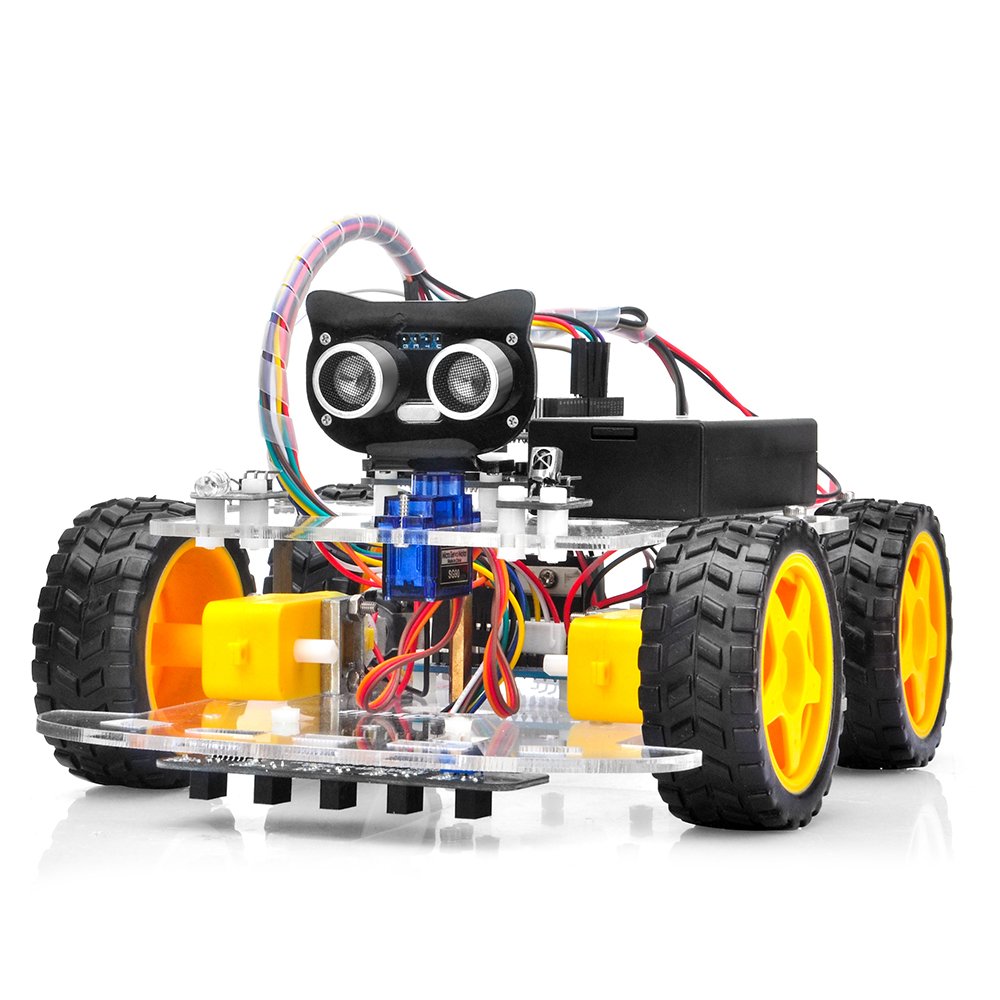
Arduino robot car — educational project for young women
An Arduino project — the gateway into physical infrastructure
◆ ARDUINO, ROBOTICS, CONNECTED CARS — BEFORE THE BACCALAUREATE

Hands in the machine before the theory. An Arduino project that blinks an LED, then controls a robotic arm, then connects two microcontrollers — this three-year journey in middle school builds a hardware intuition that theoretical computer science classes do not build. The girl who assembled her own robot at 13 does not need anyone to explain what a GPIO, an I2C bus or an output voltage is. She lived it. And this lived experience changes the relationship to the physical layer for the rest of a professional life.

The connected car, the drone, home automation — these projects have an additional advantage: they are bridges between the physical world and the digital world. They show that infrastructure is not abstract. It is in objects. It is in the home. It is everywhere.

◆ A SINCERE CALL — WRITTEN BY MY OWN HAND

Our women — of every age — need to come and reinforce us in the face of abstraction. Bare-metal, cables, servers, the physical layer: this is ground where they have every right, every intelligence, every perspective. If they do not come, if we do not bring them, if we do not show them that this is for them as much as for us — it is going to be a mess. For infrastructure. For sovereignty. For all of us.

— Amine RAITI
◆ WHAT COMPANIES CAN DO

Companies that want to correct the imbalance in their infrastructure teams do not have to wait for the market to do it. They can sponsor robotics clubs in nearby high schools. They can organise "infrastructure days" for final-year female students. They can mentor women in systems and networking HNC programmes. These actions cost little. They produce results over a 3-to-5-year cycle — not a quarter. They are the only diversity investments that work structurally.

◆ WHAT THE MEN IN PLACE CAN DO

The senior SRE who reads this study and recognises their own team in what it describes has a simple responsibility: make their team visible. Talk about their profession in schools. Invite female students to visit their server room. Share their own beginner struggles — the poorly connected cables, the failed configurations, the on-call nights. Show that this profession is learned, requires no particular gift, and is open to anyone who wants to practise it.

◆◆◆

A professional body amputated by half cannot defend digital sovereignty at full strength. Reconstruction begins before the baccalaureate — not after hiring.

◆◆◆
NEMO SUPRA LEGEM EST