100%
GRIMOIRE
GrimoireDindon CorpusSynthesis VolumesThe Foundation of Iron
FRENAR
HUMAN
STRUCTURAL STUDY · OPÉRATION DINDON · JUNE 2026
◆◆◆
أَتَسْتَبْدِلُونَ
الَّذِي هُوَ أَدْنَىٰ
بِالَّذِي هُوَ خَيْرٌ
Are You Trading What Is Better For What Is Inferior?
Sarcastic Reflections on the Cloud Paradox
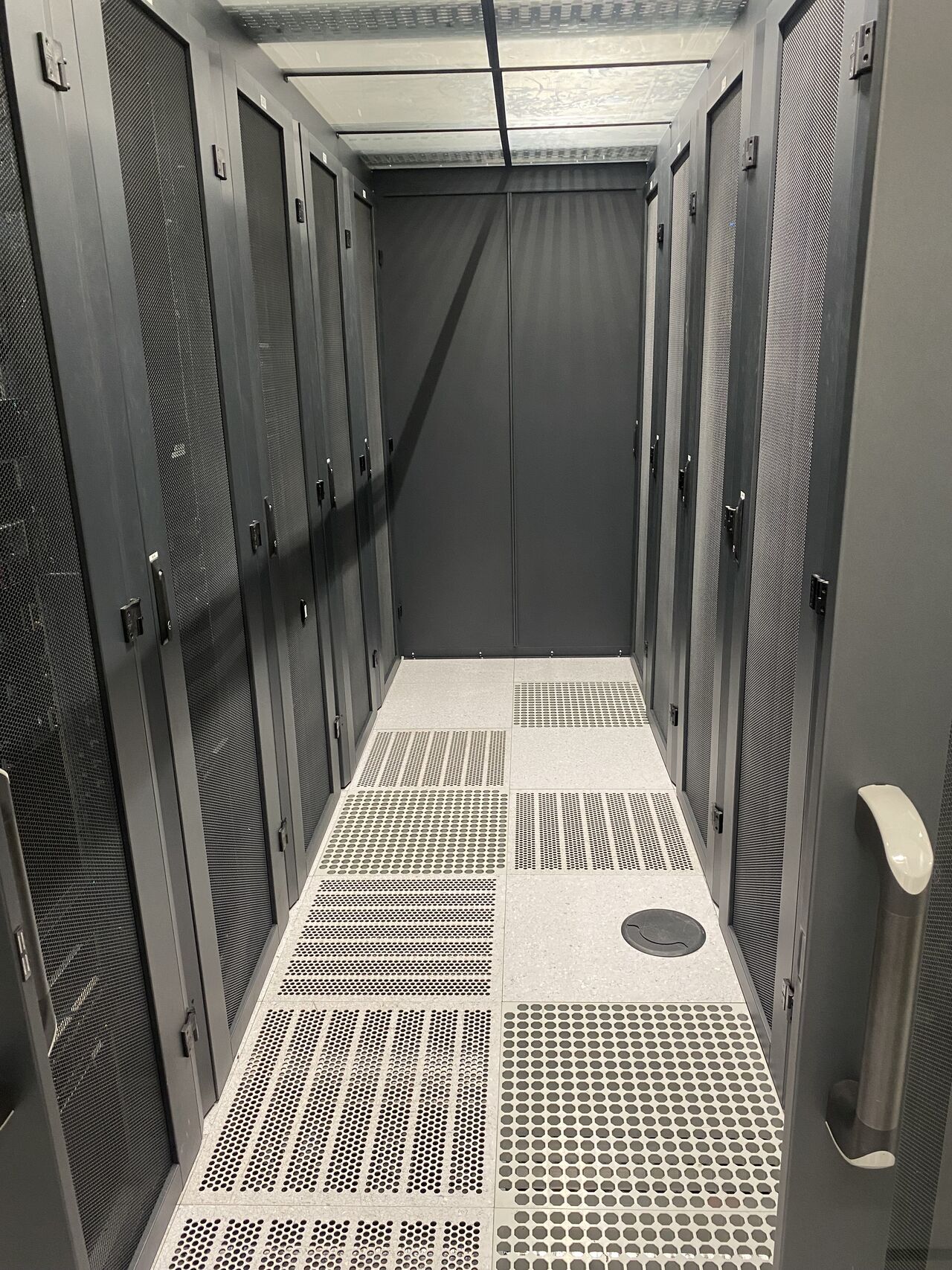
Cold aisle — server racks
Cold aisle — server racks · Property of Amine RAITI
◆ THE QUESTION

You have this. AWS has this. The difference: you know yours. You know what is inside, who cabled them, how they work. Their racks — you will never see them, you will not know exactly where they are, and if someone knocks on the door with a warrant, you will be the last to know. Why are you trading what is better for what is inferior?

Amine RAITI — Infrastructure Architect & SRE
Former engineering school professor · Teaching since 2006
Public document · CC BY-NC-SA 4.0 · Opération Dindon · June 2026
HUMAN
1
SECTION 1 · THE FOUNDING PARADOX — THEY MASTER WHAT YOU ARE ABANDONING
AWS HAS 70% OF THE CLOUD MARKET · THEIR ADVANTAGE: BARE-METAL · YOUR STRATEGY: ABANDON BARE-METAL

AWS, GCP and Azure control roughly 70% of the global cloud market. Their competitive advantage — the one that distinguishes them from every competitor — is absolute mastery of bare-metal. They know how to cable a datacentre, size a power supply, choose a processor, optimise cooling, build a physical network at planetary scale. They have thousands of engineers doing exactly what the corpus calls "the mastery of iron". It is on this mastered physical substrate that they build the cloud services they sell.

◆ THE MOST ELEGANT BUSINESS MODEL IN THE HISTORY OF COMPUTING

Step 1: master bare-metal perfectly.
Step 2: convince your customers that bare-metal is "legacy", "complex", "not your core business".
Step 3: sell them access to your bare-metal as a managed service, with a comfortable margin, a "noncancellable" contract, and California jurisdiction.
Step 4: watch your customers let go of their bare-metal engineers — eliminating any possibility of going back.

Brilliant. Truly. The corpus calls this "The Anatomy of the Loss". Hyperscalers call it "the cloud".

◆ TRANSLATED INTO PLAIN LANGUAGE

You have a cold aisle. Racks. Engineers who know what is inside. Someone convinces you that this is a problem. You decide to hand everything over to people who have exactly the same thing — but much larger, with much less transparency, under US law, with a margin that would make any Paris estate agent blush. Then you pay egress fees to retrieve your own data.

أَتَسْتَبْدِلُونَ الَّذِي هُوَ أَدْنَىٰ بِالَّذِي هُوَ خَيْرٌ
Are you trading what is better for what is inferior?

◆ NASSIHA — THIS IS NOT A CRITIQUE OF CLOUD IN GENERAL

Cloud has real advantages — elasticity, no upfront investment, complex managed services. The question is not "cloud or no cloud". The question is: why go to extraterritorial actors who make you dependent, when local and national actors offer the same services, under European law, with margins that allow real local R&D?

HUMAN
2
SECTION 2 · THE SUB-TENANT — THE ECONOMIC MECHANICS OF THE DEAL
YOU WERE THE OWNER · YOU BECOME THE TENANT · YOU PAY THE SUB-LANDLORD'S MARGIN

Imagine the following scenario. You own a flat. It works. You know it. Your plumber knows it. Your electrician knows it. Then someone convinces you that managing a flat is complicated, that it is not your core business, that you should hand it over to a professional. You give them the keys. They sub-let your own flat back to you at three times the price, with a three-year non-cancellable lease, fees if you want to get your belongings back, and a clause saying that if the US justice system wants to enter, it can do so without telling you.

◆ THE MECHANICS IN NUMBERS — WHAT THE MARGINS MEAN

A good quality physical server — 2 sockets, 512 GB RAM, 10 TB NVMe — costs approximately €15,000 to €25,000 to buy. Amortised over 5 years with colocation and power: approximately €500 to €800/month.

The cloud equivalent at AWS (r6i.16xlarge instance, 64 vCPU, 512 GB RAM): approximately €3,500 to €4,500/month on-demand. As a 3-year Reserved Instance: approximately €1,800 to €2,200/month.

Ratio: 2.5x to 4x the bare-metal cost. Over 5 years, for a single server, the difference is €80,000 to €200,000. This difference is the hyperscaler's margin — and egress fees are not included.

◆ WHAT THIS MARGIN FINANCES — FOR THEM

With European companies' cloud budgets, AWS finances new datacentres, new regions, new proprietary services that create new dependencies. GCP finances Gemini and its AI models. Azure finances Microsoft ecosystem integration.

With a tiny fraction of these same budgets — redirected to local providers — Ecritel, DRI, OVH, Scaleway, Infomaniak could fund R&D that would make Europe less dependent. They could build equivalents of SQS, Pub/Sub, DynamoDB — under European law, with European engineers, in datacentres whose cold aisles you could one day visit.

HUMAN
3
SECTION 3 · LOCAL PROVIDERS — WHAT A FRACTION OF THE BUDGET WOULD DO
ECRITEL · DRI · OVH · SCALEWAY · INFOMANIAK · IONOS · CLARANET — THEY EXIST

In France and across Europe, there are very good quality cloud providers, subject to European law, with local technical teams, capable of building custom solutions, understanding sector-specific regulatory constraints (health, finance, defence), and whose margins would remain in Europe. They are called Ecritel, DRI, OVH, Scaleway, Claranet, Infomaniak, IONOS — and a dozen others. They have cold aisles. They have racks. They have engineers.

◆ WHAT THEY CAN DO THAT THE BROCHURES DO NOT SAY

Custom work: a local provider can adapt their infrastructure to your specific needs. A hyperscaler adapts you to their infrastructure. The difference is not cosmetic — it is architectural.

Equivalent services: equivalents of SQS, Pub/Sub, DynamoDB, S3 exist at European providers — or can be built on open source technologies (Kafka, MinIO, ScyllaDB, RabbitMQ) hosted there. The Sovereign Interface documented in the corpus allows switching without application rewrite.

Native regulatory compliance: a French datacentre hosting health data is subject to HDS. A European datacentre hosting financial data is subject to DORA. No need to build a compliance layer on top of a service designed for the US market.

The possible visit: you can ask to visit their cold aisle. Try that with AWS.

◆ THE R&D ARGUMENT — WHAT A TINY FRACTION OF COMMITS WOULD DO

The French cloud market represents several billion euros per year. A fraction of these budgets — redirected to local providers — would allow them to fund R&D at the scale of their ambitions. To recruit the bare-metal engineers that large French companies let go. To build competitive managed services. To invest in datacentres powered by French renewable energy. The choice to spend with AWS or with OVH is a political choice as much as a technical one.

HUMAN
4
SECTION 4 · THE DEALERSHIP — THE AUTOMOTIVE PARABLE
YOU WERE THE OWNER · YOU ARE NOW THE TENANT · YOU CALL THIS A STRATEGY

"Cloud strategy in three steps."

◆ STEP 1 — CONVINCE

Let go of your bare-metal engineers. "It is legacy." Close your cold aisle. "It is CAPEX, cloud is OPEX, it is more flexible." Abandon your physical network. "SD-WAN is the future." Validate your team's AWS certifications with training budgets. "It is upskilling, it is good." Brilliant. You have eliminated any possibility of going back.

◆ STEP 2 — DEPEND

Migrate your applications to proprietary managed services. DynamoDB because it is simple. BigQuery because it is powerful. Lambda because it is convenient. Pub/Sub because everyone does it. Six months later, these dialects are everywhere in your code. Your developers are AWS certified. Your CIO gives presentations on "our cloud journey". Your CTO quotes the Gartner Magic Quadrant. Everything is fine.

◆ STEP 3 — PAY

Receive the egress fees invoice when you try to retrieve your data. Discover your Reserved Instances are "noncancellable". Learn the applicable jurisdiction is Californian by reading the Terms — which nobody had read. Receive notification of a 30% price increase with notice of... none (GCP §2.6: "at any time"). Watch your €10 million annual cloud budget finance AWS's new datacentre in Spain.

أَتَسْتَبْدِلُونَ الَّذِي هُوَ أَدْنَىٰ بِالَّذِي هُوَ خَيْرٌ

◆ THE EXIT — IT EXISTS, IT IS NOT SIMPLE, IT IS POSSIBLE

The Sovereign Interface (corpus study) allows decoupling application code from the hyperscaler dialect. The Gentle Exit allows progressive migration without a catastrophic D-Day. Local providers — Ecritel, DRI, OVH, Scaleway — can receive what returns. Bare-metal competence can be rebuilt. Slowly. Painfully. But it can be. The corpus documents the path.

HUMAN
EPILOGUE · THE PHOTO THAT SAYS EVERYTHING
THE COLD AISLE — PROOF THAT MASTERY OF IRON IS POSSIBLE
Cold aisle — server racks — Amine RAITI
Cold aisle · Property of Amine RAITI · Mastery of iron exists — it is sometimes called a personal cold aisle
◆ WHAT THIS PHOTO SAYS

Mastery of iron is not an abstraction from the Opération Dindon corpus. It is a cold aisle. It is racks. It is hand-done cabling, dimensioned power supplies, configured network cards, updated firmware. It is someone who knows what is inside, why it is there, and what happens when it fails at 3am.

AWS has thousands of cold aisles like this one — and they generate 70% of the global cloud market from them. The question is not whether bare-metal is possible. The photo proves it is. The question is why organisations that could have this prefer to pay more not to have it — under California jurisdiction.

◆◆◆

أَتَسْتَبْدِلُونَ الَّذِي هُوَ أَدْنَىٰ بِالَّذِي هُوَ خَيْرٌ

Are you trading what is better for what is inferior?
— Al-Baqara, 2:61

◆◆◆
NEMO SUPRA LEGEM EST